Dental Crown Falls Out or Breaks: Urgent Tooth Restoration in Warsaw
A dental crown withstands a daily load of 200-300 N-equivalent to approximately 20-30 kg of force applied to just a few square millimeters of the tooth's surface. Despite its high durability, a crown has a limited lifespan. Within 10 years, 5% to 17% of such restorations require further intervention due to the crown becoming loose (loss of cementation), chipping, or the underlying supporting tooth sustaining damage.
When a crown falls out or cracks, the tooth is left exposed and vulnerable. The dentin and pulp become susceptible to infections, temperature sensitivity, and mechanical pressure. Bacteria can penetrate the dentinal tubules within hours, triggering a carious process; without the protection of a crown, this decay progresses significantly faster than it would on intact enamel. If the inflammation reaches the pulp, root canal treatment becomes inevitable.
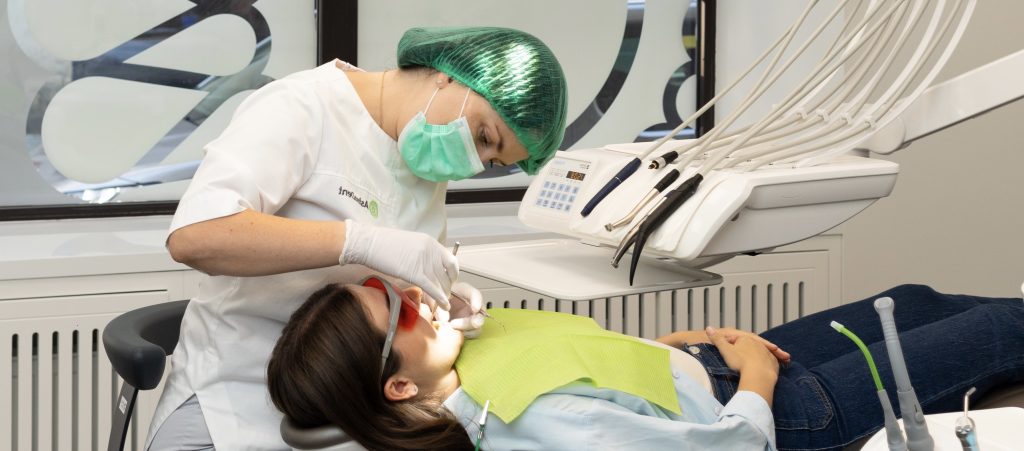
Astra Dent is a dental center in Warsaw specializing in the urgent restoration of dental crowns. By utilizing CT scans and digital impressions, the clinic streamlines the planning and fabrication of prosthetic restorations, reducing the total treatment time to just 3-5 days.
Why might a dental crown fall out or break?
The failure or loss of a crown is not always the result of poor-quality dental work. Most often, the issue arises from a combination of several factors:
- Deterioration of the dental cement. Over time, the dental cement securing a crown undergoes gradual degradation due to exposure to oral moisture and the forces exerted during chewing. Loss of cementation is one of the most common reasons for crown failure, occurring in approximately 5-7% of patients within the first five years after placement.
- Dental caries (tooth decay). A tooth surface covered by a crown is not entirely immune to decay. If caries develops, it destroys the underlying tooth structure from within, causing the crown to lose its support.
- Trauma or hard foods. A sudden impact, a fall, or the habit of chewing nuts, ice, or hard candies can generate forces that exceed the material's structural strength. This issue occurs most frequently with all-ceramic crowns (those lacking a metal framework).
- Bruxism. Grinding one’s teeth during sleep places significant stress on the entire dental system. Statistics indicate that bruxism affects 8-10% of the adult population; in these patients, crowns tend to wear down much faster.
- Aging of the restoration. No crown lasts forever. Metal-ceramic and zirconia restorations have a finite lifespan; after 10-15 years of use, replacement becomes a practical necessity rather than an unexpected event.
In most cases, problems with crowns develop gradually and are identified during routine dental check-ups. Regular check-ups, bite correction, and the timely replacement of worn-out restorations help reduce the risk of a crown suddenly falling out or fracturing.
What should you do if a crown falls out or cracks?
The first 2-3 hours after the incident are critical for determining whether both the tooth and the restoration can be saved. Exposed dentin reacts almost immediately to temperature changes and bacteria, so you must act quickly and methodically:
- Do not attempt to reattach the crown yourself. Household glues, superglue, or chewing gum are chemically harsh on tooth enamel and oral tissues; furthermore, any foreign material will prevent the dentist from seating the crown accurately.
- Keep the crown. Rinse it with cool water (do not use soap) and place it in a clean, dry container. According to prosthodontists, up to 60% of dislodged crowns can be successfully reattached, provided the crown itself is intact and the underlying tooth has not sustained further damage.
- Avoid chewing on that side. An exposed tooth is significantly less resistant to pressure; even normal food can cause the tooth to chip or the root to crack.
- Rinse your mouth with warm water. This will remove food debris and soothe the tissues without the use of antiseptics, which could further irritate the exposed dentin.
- Schedule an appointment with your dentist for the same day. The presence of pain or swelling indicates an inflammatory process.
As a temporary measure — lasting only a few hours — you might use dental cement purchased from a pharmacy. However, this is not a substitute for proper treatment, as such materials do not provide a hermetic seal and fail to prevent bacterial contamination.
Why is delaying treatment dangerous?
Every day without treatment narrows the range of available solutions and increases their cost. Without the protection of a crown, a tooth loses its structural integrity and becomes vulnerable to destructive processes:
- Infection and abscess. Bacteria convert sugars into acid, which destroys the dentin. An untreated infection can spread into deep cervical spaces and trigger purulent inflammation of the surrounding tissues.
- Progressive destruction of the supporting tooth. Without a crown, chewing forces are distributed unevenly, causing the tooth walls to crack and chip. The less hard tissue remains, the more complex and costly the restoration becomes.
- The need for endodontic treatment. If an infection reaches the pulp, root canal treatment becomes unavoidable. Teeth that are not fitted with a crown in a timely manner are six times more likely to be lost compared to those that are protected by a crown on time.
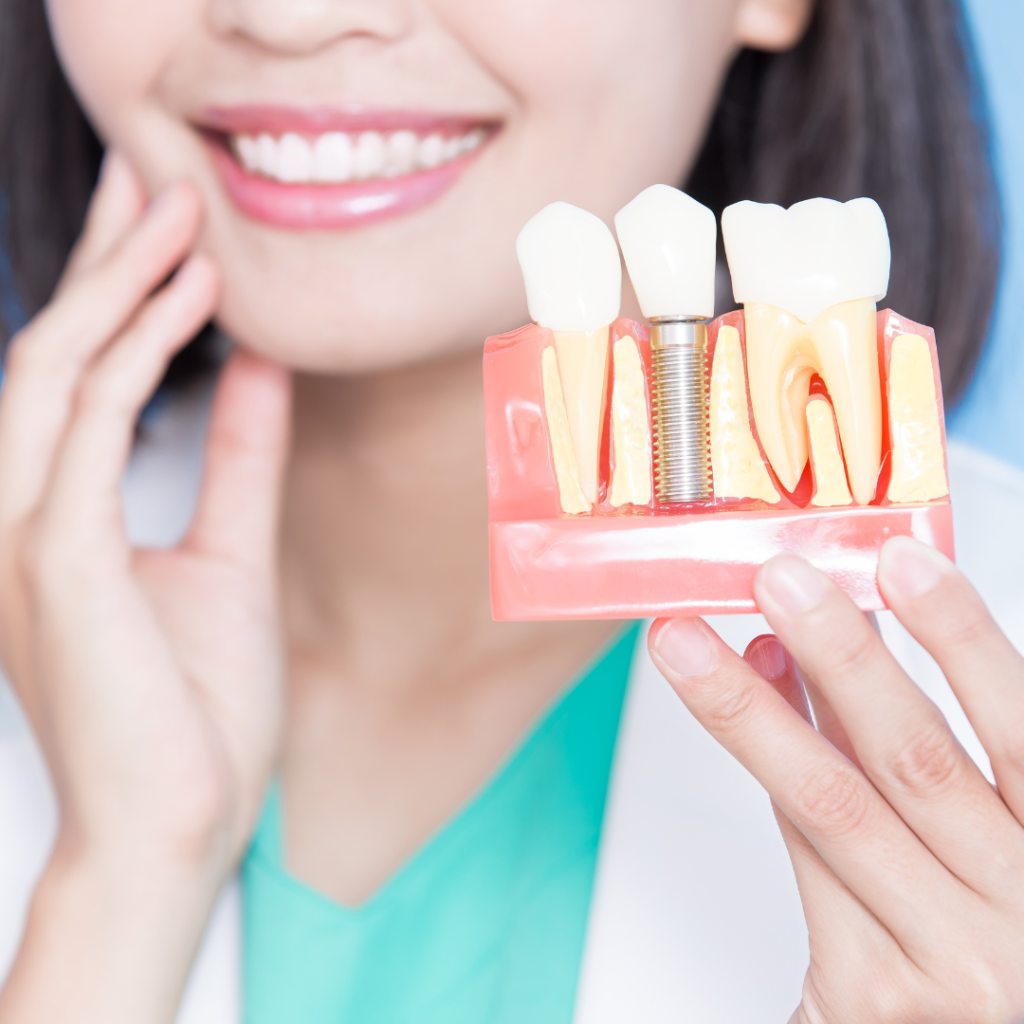
- Tooth loss and the need for an implant. Extraction is not the end of treatment, but rather the beginning of a more complex and expensive protocol involving dental implants, bone grafting, and prosthetic restoration. A situation that could have been resolved in a single visit turns into several months of treatment.
It is notable that the survival rate of molars without a crown following endodontic treatment is only 36% after 5 years, compared to a 96% survival rate in the first year. This confirms the fact that degradation accelerates over time.
Diagnostics at Astra Dent in Warsaw
An accurate diagnosis determines the course of therapy — whether it will require one visit or several, a re-cementation of an existing restoration, or the creation of a new one. For this reason, diagnostics at Astra Dent are treated as an integral stage of treatment, rather than just a routine pre-procedure check-up:
- Clinical examination. The dentist assesses the condition of the gums, the extent of tooth damage, the bite (occlusion), and the presence of any inflammation in the surrounding tissues.
- X-rays and CT scans. Three-dimensional imaging allows for the evaluation of the tooth root and bone density, and helps detect hidden foci of infection that would not be visible on a standard 2D X-ray.
- Periodontal assessment. The dentist checks the depth of periodontal pockets, the level of the alveolar bone crest, and the condition of the gums around the affected tooth. This is essential for planning the long-term placement of a new restoration.
- Evaluation of an existing crown. If the restoration is still intact, the dentist assesses its geometry, marginal fit, and checks for internal cracks. If it meets the necessary criteria, it can be re-cemented, saving the patient the cost of fabricating a new one.
All diagnostic procedures are performed on-site at the Astra Dent dental center, eliminating the need for referrals to outside facilities and saving you time.
Treatment Options at Astra Dent in Warsaw
The specific approach depends on the condition of the tooth, the integrity of the existing restoration, and the results of the CT scan. In most cases — provided the patient seeks care in a timely manner — minimal intervention is sufficient:
- Re-cementation of a crown. If the restoration remains intact and fits correctly, a new crown is not required. The old luting cement is removed using an ultrasonic scaler; the surfaces are cleaned and degreased, and the crown is then re-cemented using either a glass-ionomer or an adhesive cement, depending on the material.
- Crown repair. In cases of localized ceramic chipping where the structural integrity of the restoration is not compromised, the material is repaired using a microhybrid or nanofilled composite restoration. The surface is first sandblasted to ensure a strong adhesive bond.
- Fabrication of a new crown. If the existing restoration is deformed, or if the tooth has undergone significant shape changes due to structural breakdown, a digital impression is taken using an intraoral scanner. Zirconia or all-ceramic crowns are fabricated in a dental laboratory using CAD/CAM technology.
- Root canal treatment and a new crown. If the dental pulp is affected or periapical inflammation is detected on a CT scan, the dentist performs complete endodontic treatment under a microscope. Subsequently, the tooth is restored using a core build-up (post-and-core) and a permanent crown.
- Tooth extraction with implant planning. This approach is used when saving the tooth is clinically impossible. The dentist immediately develops an implant protocol — accounting for available bone volume and the optimal timeline — to prevent atrophy of the alveolar ridge.
Most patients who seek care within 24–48 hours of losing a crown can be treated using the first two options.
How is a tooth restored after the loss of a crown at Astra Dent Warsaw?
The number of visits depends on the chosen solution. Simple re-cementation requires a single appointment, while the fabrication of a new crown takes two or three visits.
Treatment stages at Astra Dent in Warsaw:
- Consultation and diagnostics. The dentist takes the patient's medical history, analyzes CT scans, and agrees on a treatment plan with the patient.
- Local anesthesia. Astra Dent specialists use fourth-generation articaine-based anesthetics, which provide a duration of pain relief sufficient for any type of procedure.
- Tooth preparation. The dentist removes any remaining old cement and carious tissue (if necessary), and prepares the surface texture to ensure optimal adhesive bonding.
- Temporary crown. If the permanent restoration is being fabricated in a laboratory, a temporary crown is placed for the interim period to maintain chewing function and protect the tooth.
- Placement of the permanent crown. After a trial fitting and bite adjustment, the restoration is cemented in place using glass-ionomer or adhesive cement.
- Follow-up examination. After 2-4 weeks, the dentist checks the bite, the condition of the gums, and the marginal fit of the crown, making any necessary adjustments.
Crowns are fabricated at a partner dental laboratory using verified materials. Digital scanning, as an alternative to silicone impressions, improves the accuracy of capturing tooth geometry and shortens the production cycle to 3-5 business days.
Is getting a dental crown painful?
The fear of pain is one of the primary reasons patients postpone dental treatment. However, modern anesthesia has significantly transformed this experience. At Astra Dent, we use articaine-based anesthetics containing a vasoconstrictor; these provide profound anesthesia within 2-3 minutes, with an effect lasting up to 3 hours. Once the anesthesia wears off, you may experience brief sensitivity in the treated area, but this typically resolves within 12-24 hours and can be managed with standard over-the-counter painkillers.
Outcomes of Treating a Broken or Lost Dental Crown
Seeking timely care at a dental center fundamentally improves the prognosis — both for the individual tooth and for the overall bite (occlusion):
- A hermetically sealed tooth with restored anatomical shape and proper occlusal contact. Modern zirconia crowns, fabricated using CAD/CAM technology, feature a marginal fit of up to 50 microns — twice as precise as traditional metal-ceramic crowns. This significantly reduces the risk of microleakage and secondary decay.
- Restored chewing function, eliminating the need to favor one side of the jaw. Even distribution of chewing forces lowers the risk of temporomandibular joint (TMJ) dysfunction — a condition that often develops following prolonged asymmetric chewing.
- Aesthetics that match natural teeth. Metal-free ceramics and zirconia allow light to pass through naturally and do not cause dark lines to appear near the gum line over time, unlike metal-ceramic restorations.
- Protection against complications. A well-sealed crown isolates the tooth from the bacteria-rich oral environment, halting any decay that may have begun while the tooth was left unprotected.
Treatment results typically last 10-15 years, provided the patient maintains regular oral hygiene and attends check-ups every six months. A properly placed crown requires no further intervention until the material eventually undergoes natural wear.
Why do patients choose Astra Dent Warsaw for dental crown treatment?
Choosing a dental center for urgent care involves more than just price. For patients from Ukraine living in Warsaw, factors such as appointment availability, language, and confidence in the quality of materials are crucial. The Astra Dent team prioritizes these needs:
- Experienced doctors. Our specialists hold verified qualifications in prosthodontics and endodontics and regularly undergo certification based on international protocols. Complex clinical cases are handled with care, avoiding rushed judgments or "one-size-fits-all" solutions.
- Same-day urgent appointments. Astra Dent reserves slots for urgent cases, ensuring an initial consultation either the same day or the following morning.
- CE-certified materials. The center uses zirconia crowns and ceramics from verified European manufacturers with proven clinical success rates. We never offer generic alternatives of unknown origin.
- English-speaking staff. All communication takes place in your native language. Patients can fully understand every step of their treatment, payment terms, and aftercare — without any language barriers.
- Comprehensive on-site diagnostics. Astra Dent is equipped with CT scanning, digital intraoral scanners, and X-ray technology. This self-contained facility, combined with modern equipment, eliminates the risk of data transfer errors between clinics and minimizes the time between your initial contact and the start of treatment.
- City center location, no waiting in line. The convenient location ensures easy access to Astra Dent via public transport. Appointments are scheduled precisely, which helps avoid queues and waiting in the reception area.
For a patient dealing with a damaged crown, this means a streamlined process — from the initial call to the dentist to the final resolution of the issue.
How can one book an appointment at Astra Dent in Warsaw?
If a crown has fallen out or broken, you should contact a dentist as soon as possible to prevent further damage to the tooth. The reception staff at Astra Dent in Warsaw speak English, so you will have no trouble explaining your situation:
- Phone: +48 533 599 552;
- Email: info@astradent.pl;
- Online form: available on the official website.
To ensure an efficient visit, please bring the old crown with you — even if it appears broken or unusable. In some cases, the crown can be re-cemented, allowing the issue to be resolved in a single visit without the additional cost of fabricating a new one.
Published:
20 October 2026, 13:07

Last update:
26 October 2026, 08:55