Bad breath: causes and effective treatment in Warsaw
Every fourth adult has at least once encountered a problem that they are embarrassed to mention out loud. According to epidemiological studies, chronic halitosis (from the Latin halitus — breath) is observed in 25-30% of the world's population. Despite this, most people limit themselves to chewing gum and menthol sprays for years, postponing a visit to the dentist. Meanwhile, bad breath in the vast majority of cases is not a matter of food taste or poor hygiene, but a signal about the condition of the teeth or gums that requires treatment.
What is halitosis?
Halitosis is a persistent unpleasant odor from the oral cavity that does not disappear after brushing your teeth, rinsing or chewing gum. Dentists distinguish two clinically different options:
- temporary halitosis occurs after certain foods (garlic, onions, alcohol), smoking or decreased salivation during sleep and disappears on its own within a few hours;
- сhronic halitosis is present regardless of the time of day and mealtimes, does not respond to mouthwashes and is a sign of a pathological process.
The mechanism of odor formation is associated with volatile sulfur-containing compounds, in particular hydrogen sulfide and methyl mercaptan. They are produced by anaerobic bacteria that live in dental plaque, periodontal pockets and on the posterior third of the tongue. Chewing gum suppresses odor for 15-20 minutes, but does not affect the bacterial flora in any way.
The main causes of bad breath
A correctly identified cause of bad breath is half the success of treatment. Doctors distinguish two main groups of factors: intraoral (dental) and systemic.
Dental causes
According to statistics, 85-90% of cases of chronic halitosis are of dental origin. The most common of them are:
- Caries. A carious cavity is an isolated anaerobic environment in which bacteria decompose organic matter and produce sulfur-containing compounds. The patient may not suspect deep caries for years until the smell becomes noticeable to others.
- Inflammation of the gums (gingivitis and periodontitis). The space between the tooth and the gum accumulates plaque and food debris. When the pocket is more than 3 mm deep, conditions become ideal for anaerobic pathogens.
- Dental calculus. Mineralized plaque cannot be removed with a brush. Its porous structure becomes a permanent reservoir of pathogenic flora. Subgingival calculus, which is not visible during self-examination, is especially dangerous.
- Plaque on the tongue. The back third of the tongue is the source of more than 60% of all sulfur-containing compounds in the mouth. A standard toothbrush cannot physically reach there.
- Oral infections. Pericoronaritis (inflammation of the hood over the wisdom tooth), untreated abscess or alveolitis after tooth extraction are accompanied by purulent tissue decay.
Some of these conditions do not cause discomfort for a long time. Deep caries or subgingival calculus may not cause pain for years, but they steadily produce pathogenic bacteria. That is why symptomatic treatment is useless, dental diagnostics are required.
Other possible causes
If the dentist has not found any obvious problems in the oral cavity, systemic factors should be considered:
- Dry mouth (xerostomia). Saliva washes away bacteria, neutralizes acid, and saturates the oral cavity with antimicrobial enzymes. Some antihypertensive drugs, antidepressants, and antihistamines significantly reduce salivation as a side effect.
- Gastrointestinal diseases. Gastroesophageal reflux disease (GERD), chronic gastritis, or Helicobacter pylori infection can cause odors that come from the lower digestive tract through the esophagus.
- Smoking. Nicotine and tar dry out the mucous membranes, suppress salivation, and change the oral microbiome. In addition, the tars themselves have a pronounced persistent odor.
- Certain foods (garlic, onions). Allyl sulfides from food are absorbed into the blood and excreted through the lungs within 4-8 hours, regardless of brushing your teeth.
It is not uncommon for several factors to act simultaneously. For example, a smoker with xerostomia and subclinical periodontitis. In this case, eliminating one factor is not enough, a comprehensive approach is needed.
Symptoms that may accompany the problem
Bad breath is rarely the only complaint. It is worth paying attention to the following signs:
- a persistent odor that persists after brushing your teeth and is not associated with a specific product;
- dry mouth, especially in the morning or after taking certain medications;
- a white or yellowish coating on the back third of the tongue;
- bleeding gums when brushing your teeth or chewing hard foods;
- a bitter, salty, or metallic taste that occurs for no apparent reason.
The appearance of two or more symptoms at the same time is a sufficient reason for an unscheduled visit to the dentist, without waiting for a scheduled examination.
Why should you not ignore the problem?
Bad breath is a symptom, not an independent disease. If you ignore it, the primary process continues to progress:
- Development of periodontitis. Untreated gingivitis is cured in several sessions. Periodontitis (destruction of bone tissue around the tooth) is a chronic irreversible process that ultimately leads to tooth loss.
- Spread of infection. An untreated abscess or inflammatory focus can spread to neighboring tissues. In rare cases, osteomyelitis (inflammation of the jaw bone tissue) develops.
- Deterioration of the health of teeth and gums. Progressive caries and periodontitis complicate and increase the cost of further treatment. Each missed month can turn a simple filling into the need for prosthetics.
- Psychological discomfort. Chronic halitosis reduces self-esteem, makes business and personal communication difficult. Some patients develop social anxiety and a tendency to avoid live contact.
Diagnostics at a dentist in Astra Dent Warsaw
Accurate diagnostics are the foundation of any successful treatment of bad breath. At Astra Dent, it involves several procedures:
- Examination of the oral cavity. The doctor assesses the condition of the enamel and dentin, detects carious cavities, visible inflammation, damage to fillings and defects in the mucous membrane.
- Assessment of the condition of the gums. The dentist probes periodontal pockets to measure their depth, record bleeding and the degree of inflammation.
- Checking for tartar. Identification of supragingival and subgingival deposits allows the doctor to detect periodontal inflammation.
- Analysis of the condition of the tongue. The specialist assesses the nature and amount of plaque on the middle and posterior third as a potential source of unpleasant odor.
- Additional examinations. If necessary, the dentist performs a targeted radiography, an orthopantomogram (panoramic image of the jaws), and in case of systemic causes, he gives a referral to a gastroenterologist or ENT.
A comprehensive approach allows you to establish the specific source of the unpleasant odor and prescribe targeted, rather than general, treatment.
Treatment methods at Astra Dent Warsaw
Depending on the diagnostic results, the treatment plan may include the following procedures:
- Professional dental hygiene. An ultrasonic scaler destroys mineralized tartar. The Air Flow device removes soft plaque even from hard-to-reach areas. The procedure takes 45-60 minutes and significantly reduces odor on the day of the visit.
- Caries treatment. Removal of affected dentin and filling eliminates the anaerobic environment for bacteria and eliminates one of the main sources of unpleasant odor.
- Gum treatment. Closed or open curettage of periodontal pockets, antiseptic irrigation and local antibiotic therapy create conditions unfavorable for the reproduction of pathogenic bacteria.
- Tartar removal. Depending on the volume of deposits, the procedure takes 1-2 sessions.
- Home hygiene recommendations. The doctor helps to choose a brush of appropriate hardness, floss or superfloss (for bridge-shaped prostheses), irrigator and tongue scraper.
If the cause of the smell is systemic, the patient receives a referral to a specialist doctor with an explanation of the clinical picture.
How is the treatment at Astra Dent Warsaw?
Treatment of halitosis at Astra Dent in Warsaw is based on an accurate determination of the cause, followed by professional cleaning, oral cavity sanitation and therapy of concomitant diseases.
- Dentist consultation. At the first appointment, the doctor collects a complete medical history: how long ago the smell appeared, are there any concomitant complaints (bleeding, tooth sensitivity, dry mouth), what medications the patient is taking. Information is extremely important, because some medications directly affect salivation and the condition of the mucous membranes.
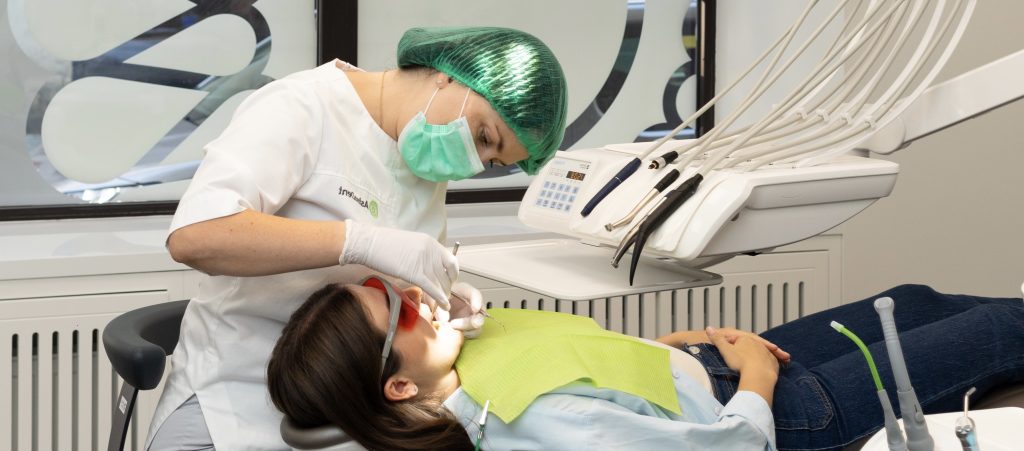
- Diagnostics. The specialist conducts a comprehensive examination using a dental probe, a periodontal probe for measuring pockets and a mirror. X-rays are taken as indicated. The doctor records all findings and draws up an individual plan with a clear explanation of each point.
- Professional teeth cleaning. An ultrasonic scaler destroys tartar through vibration (frequency 25-40 kHz). Astra Dent specialists use the Air Flow device, which removes soft pigmented plaque with a stream of soda and water. The procedure not only improves the appearance of the teeth, but also removes the main reservoir of pathogenic microorganisms and is a mandatory step before any further treatment.
- Treatment of identified problems. At this stage, fillings, gum treatment, surgical removal of an unpromising tooth or other procedures are performed, depending on the diagnosis. Each subsequent step is agreed with the patient before the manipulations begin, so there are no surprises regarding the scope and cost of treatment.
- Recommendations for oral care. After the treatment is completed, the dentist provides instructions, explaining the technique of brushing your teeth (Bass method for patients with gingivitis), the use of floss, irrigator and tongue scraper. Without high-quality home hygiene, the result of the most successful treatment will be temporary.
How to prevent bad breath?
Bad breath is primarily a matter of systemic prevention, not one-time treatment. Several habits minimize the risk of relapse:
- Regular dental hygiene. Brushing twice a day with a soft brush for at least two minutes, with mandatory flossing of interdental spaces that the brush cannot reach.
- Tongue cleaning. A special scraper or tongue brush removes plaque from the back third every morning, where the bulk of bacteria that produce sulfur-containing compounds are concentrated.
- Professional hygiene twice a year. Ultrasonic cleaning removes subgingival tartar, which accumulates even with perfect home hygiene.
- Sufficient water consumption. 1.5-2 liters per day support the normal function of the salivary glands and the natural self-cleaning mechanism of the oral cavity.
Also, do not forget about regular check-ups with the dentist. A preventive appointment once every 6 months allows you to detect caries or inflammation at an early stage, when the treatment takes 20 minutes, not several visits.
Why do patients choose Astra Dent Warsaw to treat bad breath?
Astra Dent Medical Center specializes in comprehensive dental care. Among the main reasons why people return here:
- Experienced dentists. The Astra Dent team includes doctors with confirmed Polish and international qualifications.
- Modern equipment. The specialists have digital X-rays (less radiation, higher detail), new generation ultrasonic scalers and Air Flow devices in their arsenal.
- Comprehensive diagnostics. Doctors do not make a diagnosis at a glance, but conduct a full examination before any appointment.
- Individual approach. The therapy plan is drawn up for the situation without template protocols.
- English-speaking staff in Warsaw. Consultation, diagnostics and treatment are carried out in their native language without a language barrier and misunderstandings.
- City center. Patients can count on the convenient location of the dental center with good transport accessibility from any district of Warsaw.
- Appointment without queues. The patient comes to Astra Dent at a clearly designated time without waiting in the corridor.
Specialists treat bad breath as a medical symptom. They look for and eliminate the cause, and do not interrupt it with a mouthwash for a week.
How to make an appointment at Astra Dent in Warsaw?
You can make an appointment with a dentist at Astra Dent in Warsaw in several simple ways:
- phone: +48 533 599 552;
- e-mail: info@astradent.pl;
- online form: on the website.
After applying, the administrator will clarify the details, select a convenient appointment time and confirm the appointment. During the first visit, the doctor will conduct an examination and determine the cause of bad breath, after which he will propose a treatment plan.

Published:
17 June 2026, 13:21

Last update:
02 September 2026, 09:31