Root canal treatment in children without pain: saving teeth in Warsaw
A child’s toothache does not wait for a convenient moment. It appears at night, on a weekend or before an important event, which is why parents are faced with a choice — painkillers “until Monday” or an immediate visit to the doctor. The second answer is always the right one. If a child has a toothache and the symptom does not go away within a few hours, there is a high probability that the inflammatory process has affected the pulp — the inner vascular and neurovascular part of the tooth. Postponing treatment means not only increased pain, but also the risk of the infection spreading to the surrounding tissues and damaging the germ of a permanent tooth. Modern dentistry allows root canal treatment in children to be carried out quickly, effectively and painlessly, even if the little patient is scared or has already had a negative experience.
What is root canal treatment in children?
Inside each tooth there is a cavity filled with pulp — a soft connective tissue with blood vessels and nerve endings. It is responsible for the sensitivity of the tooth to temperature and mechanical stimuli. When bacteria from the carious cavity reach the pulp, inflammation (pulpitis) begins, which is accompanied by acute pain and, if left untreated, tissue necrosis and the spread of infection beyond the root.
Root canal treatment in children and adults is fundamentally different. Baby teeth have thinner walls, wider canals and shorter roots. In addition, the rudiments of permanent teeth are located next to the roots. Therefore, any intervention must be precise and dosed so as not to damage the future tooth. That is why the treatment of pulpitis in children requires not only the doctors’ dental qualifications, but also specific experience in working with children’s maxillofacial anatomy.
In dentistry, two main approaches are used depending on the degree of damage:
- Pulpotomy — partial removal of the pulp. During the procedure, the doctor removes only the coronal (upper) part, which is located in the tooth chamber, while the root part is preserved. The intervention is recommended for acute partial pulpitis, when the inflammation has not yet spread to the root. It is less traumatic and allows you to keep the tooth functional until natural loss.
- Pulpectomy — complete removal of the pulp from the coronal chamber and all root canals, mechanical and chemical treatment of the canals with subsequent filling. The procedure is indicated for chronic pulpitis, pulp necrosis and initial periodontitis (inflammation of the tissues around the root).
The choice between pulpotomy and pulpectomy is determined by the doctor after an examination and X-ray. It is impossible to determine the depth of the lesion yourself.
How is the treatment of the canals of milk teeth performed at Astra Dent Warsaw?
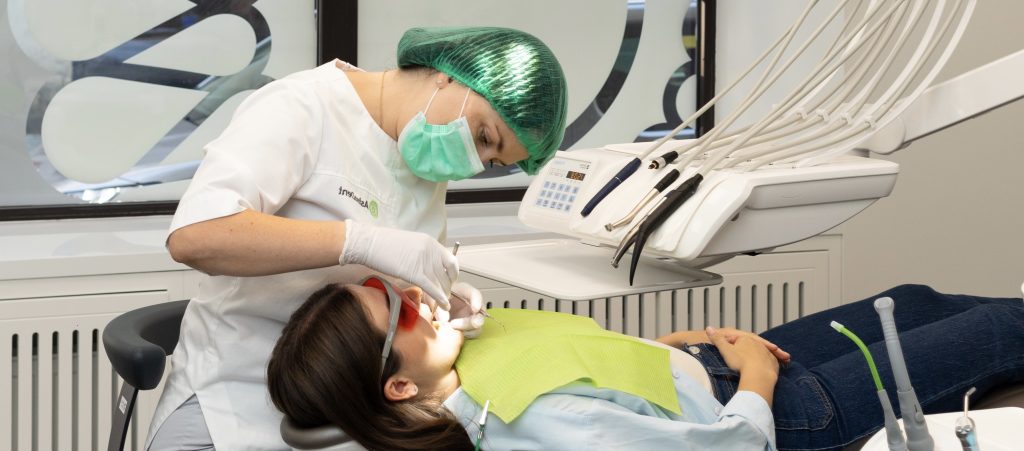
The procedure begins long before the mouth is opened to reduce psychological discomfort. The doctor gets to know the child, explains each step in an accessible form, allows the child to touch the instruments. Adaptation takes a few minutes, but fundamentally affects how the child tolerates dental manipulations.
Stages of root canal treatment in children:
- Consultation and diagnostics. The dentist collects anamnesis (how long has the pain been present, does it react to temperature, is there any swelling), examines the oral cavity, and takes a targeted X-ray to assess the condition of the canals and the rudiments of the permanent tooth. It is impossible to see the full picture without an X-ray.
- Anesthesia. First, the doctor applies an application anesthetic (usually with a fruit flavor), which freezes the mucous membrane at the injection site. After that, they inject a carpule anesthetic using a thin needle. The child feels light pressure, but not pain. Modern articaine anesthetics act quickly and reliably even in children with severe inflammation.
- Removal of infected pulp. After anesthesia, the specialist opens the carious cavity and removes the affected pulp. All this time, the child does not feel pain, although light pressure or vibration from the instruments may occur.
- Canal treatment. The doctor rinses the canals with antiseptic solutions (sodium hypochlorite, chlorhexidine) to destroy residual bacterial flora. If necessary, they are mechanically expanded with special files (endodontic instruments) for uniform filling.
- Filling the canals. Astra Dent dentists use zinc oxide-based materials or modern biocompatible pastes. They gradually dissolve together with the root of the baby tooth and do not interfere with the eruption of the permanent one.
- Tooth restoration. After filling the canals, the crown part of the tooth is restored. The doctor applies a filling or installs a steel crown. If the tooth is severely damaged, this is the most reliable way to preserve its function until it falls out.
Depending on the extent of the lesion, the procedure takes from 40 minutes to 1.5 hours. In complex cases or for particularly anxious children, it can be divided into 2 visits.
When does a child need root canal treatment?
If you are wondering what to do when your child has a toothache, the best solution is to not delay and consult a dentist. This is important if you experience symptoms that may indicate pulp damage:
- Intense toothache, throbbing, which worsens at night or is not relieved by painkillers. This symptom often indicates acute pulpitis.
- Pain from hot or cold, which does not disappear immediately after removing the irritant and lasts for more than 30 seconds. This may indicate pulp damage.
- Swelling of the gums or cheek in the area of the tooth, which indicates the spread of infection beyond the root and requires urgent treatment.
- A change in the color of the tooth to a grayish or dark pink shade, which may be a sign of pulp necrosis in the absence of pain.
The absence of pain does not mean that there is no problem. Chronic pulpitis and initial pulp necrosis are often asymptomatic. They can only be detected on an X-ray during a routine examination. This is another argument in favor of preventive visits every 6 months.
Why do parents choose Astra Dent Warsaw for the treatment of milk tooth canals?
Parents planning dental treatment for their child in Warsaw need to choose a medical institution with a delicate approach and experience working with young patients. Astra Dent specialists organize the process in such a way as to minimize stress and form a calm attitude towards treatment. To do this, gentle techniques, adapted communication and pain control are used at each stage:
- Pediatric dentists with specialized training. Astra Dent doctors specialize in pediatric dentistry, take into account the peculiarities of milk and transitional dentition, and know how to work with children of all ages without pressure and haste.
- A behavioral approach without stress. Specialists use the method of gradual familiarization with the procedure, when the child is explained each stage, shown the instruments and only then the treatment begins, which reduces anxiety and builds trust.
- Modern diagnostics and instruments. Astra Dent uses digital X-rays with low radiation levels, apex locators and rotational systems, which allow for accurate treatment and minimal discomfort.
- Communication in understandable language. English-speaking staff explains each stage of treatment to the child and parents, which helps to avoid fear and misunderstandings during the appointment.
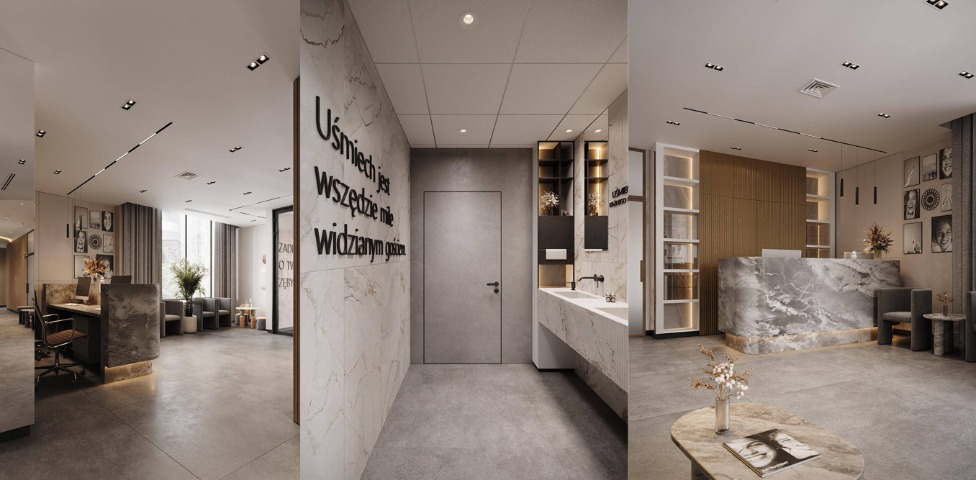
- A comfortable environment for the child. The offices are adapted to children’s perception, without strong odors and unnecessary stress, with the possibility of distraction during the procedure.
- Convenient location of the dentistry. Astra Dent is located in the center of Warsaw, which provides quick access from different areas of the city without complicated logistics.
- Reception by appointment. The time of the visit is clearly planned, so the child does not have to wait in line and worry again before the treatment.
- Pain control at every stage. Doctors use modern anesthetics and gentle techniques that allow for comfortable treatment for young patients.
Each visit to the doctor for a child is an investment in dental health and an attitude towards dentistry for the rest of their lives. Negative experiences are the most common reason for an adult’s fear of the dentist’s chair.
Does root canal treatment hurt a child?
This is one of the first questions parents ask before treatment. Modern dentistry allows most procedures to be performed without discomfort due to the precise selection of anesthesia and delicate techniques for working with the patient.
What Astra Dent specialists offer:
- Modern anesthesia. Doctors use articaine-based drugs, taking into account the child’s weight and age, to ensure complete pain relief.
- Control of sensations during the injection. Before the injection, the dentist applies an application gel, uses thin needles and slow administration of the drug, so anesthesia is tolerated calmly.
- Gradual adaptation to treatment. The doctor explains each stage, gives the child time to get used to the environment and begins manipulations only after establishing contact.
- Minimal discomfort after the procedure. After treatment, short-term sensitivity in the injection area may persist, which usually passes within a few hours.
Provided that anesthesia is correctly selected and treatment protocols are followed, the child does not feel pain during the procedure, and the visit passes calmly and without sharp sensations.
Root canal treatment methods in children
The choice of treatment method in pediatric endodontics depends on the stage of the lesion, the age of the child and how much time is left until the natural loss of the baby tooth. Manipulations and procedures are planned in such a way as to preserve the tooth for as long as possible, without complicating the eruption of the permanent one:
- Pulpotomy. Partial removal of the pulp is used for acute pulpitis, when the inflammation is limited to the coronal part of the tooth. After treatment, a therapeutic material based on MTA or calcium hydroxide is applied to the mouths of the canals, which stimulates the formation of a protective dentin barrier and allows us to preserve the viability of the root pulp.
- Pulpectomy. Complete removal of the pulp with subsequent mechanical and medical treatment of the canals and their filling with a material that gradually dissolves together with the roots of the baby tooth. The method is used for necrosis, chronic pulpitis or initial periodontal lesions and may require several stages of treatment.
- Biological treatment methods. Conservative approaches aimed at preserving the viable tooth include direct or indirect pulp capping with biocompatible materials. Such methods are possible in the absence of signs of irreversible inflammation and require further clinical monitoring.
Regardless of the method, the final step is to restore the coronal part of the tooth with a filling or crown. Without reliable canal closure, even well-treated canals can become reinfected.
What will happen if left untreated?
Parents sometimes decide not to touch a deciduous tooth if it is about to fall out. This is a common mistake with negative consequences, among which the following should be highlighted:
- Spread of infection. Bacteria from the affected pulp penetrate beyond the root and involve peri-root tissues. Without treatment, the inflammatory process can spread to the gums, bone, and adjacent teeth.
- Abscess formation. A purulent focus can occur both in the bone tissue and in the soft structures next to the tooth. In children, such conditions develop quickly and require urgent dental intervention with appropriate therapy.
- Premature tooth loss. Removing a baby tooth before the physiological term disrupts the spatial balance in the dentition. This leads to displacement of neighboring teeth and increases the risk of malocclusion.
- Impact on the germ of a permanent tooth. Chronic inflammation in the root area can damage the germ of a permanent tooth, which is sometimes manifested by enamel defects and impaired development.
A baby tooth acts as a placeholder, which maintains space in the dentition and stimulates the proper development of the jaw. Preserving it is no less important than treating a permanent tooth in an adult.
How to make an appointment at Astra Dent in Warsaw?
You can make an appointment at the dental center in a way that is convenient for you. If your child complains of pain, you should not delay. In such cases, Astra Dent specialists try to see the patient as soon as possible.
Contacts for making an appointment at Astra Dent:
- phone: +48 533 599 552;
- e-mail: info@astradent.pl;
- online form: on the website.
The first visit includes a consultation, clinical examination and X-ray examination (if necessary). After the diagnosis, the dentist explains the treatment plan, terms and costs before starting any procedures.