
satisfied patients
Surgery
Book a visit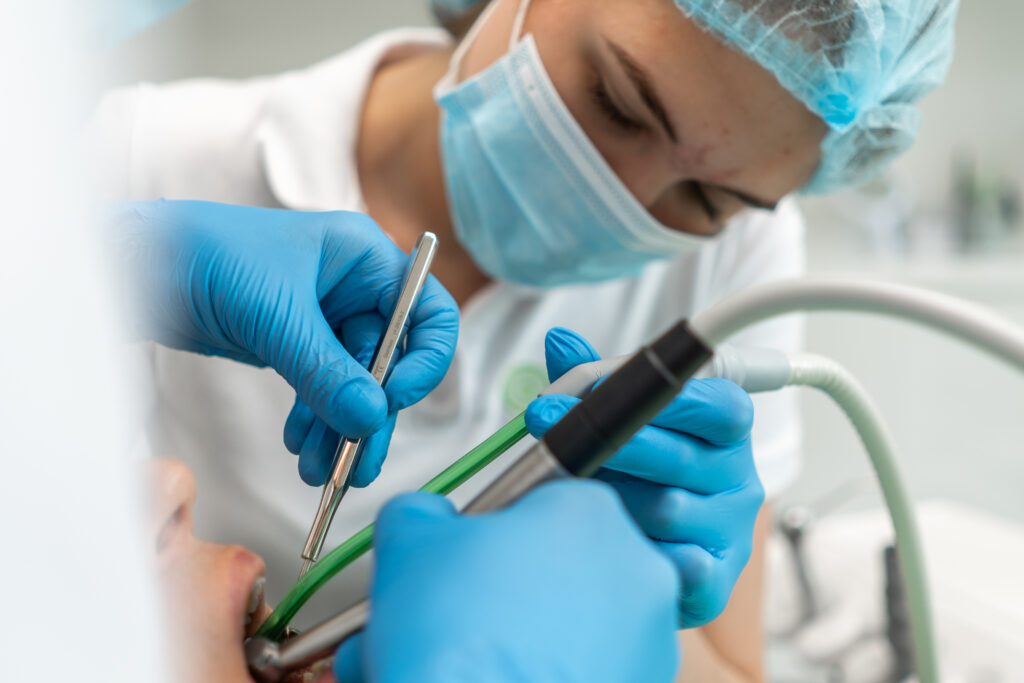
What we offer
Dental treatment in Warsaw
prices
Our prices
| Wisdom tooth removal | |
|
Simple removal of the wisdom tooth
from 1000 zł
Complex wisdom tooth removal
from 1500 zł
|
|
| Tooth extraction | |
|
Simple tooth extraction
from 300 zł
Complicated tooth extraction
from 800 zł
|
|
doctors
Best doctors
We employ only highly qualified doctors. Astra Dent dentists regularly attend professional master classes and internships in Poland and abroad.
All doctorsMore on procedure
Dental Surgery in Warsaw — Professional, Safe, and Pain-Free
Not every dental procedure is limited to fillings or tartar removal. When the situation is complex — such as cases involving bone tissue damage, deep inflammation, or the need for implants — surgical intervention becomes necessary. Astra Dent specialists perform surgeries of all levels of complexity, ranging from standard tooth extractions to reconstructive bone grafting with 3D planning.
Before the procedure, a CT scan is performed to assess bone density and volume, nerve positioning, and the extent of tissue damage. Surgeons use a digital jaw model created from the scan for navigation. Local anesthesia is selected based on the patient’s underlying health conditions, bodily response, and the expected duration of the procedure.
Astra Dent in Warsaw employs surgeons with years of practical experience who regularly undergo training at European educational centers. Procedures are carried out under strict sterile conditions, utilizing disposable instruments and autoclaved equipment, with mandatory sterilization monitoring at every stage.
Why do patients choose Astra Dent Warsaw for dental surgery?
Astra Dent is a medical center staffed by a team of professionals who meticulously plan every procedure in advance.
Advantages of surgical dental treatment at Astra Dent in Warsaw:
- Experienced surgeons with international practice. All surgeries are performed by certified specialists with over 10 years of experience who have been trained at top European educational centers. Treatment using microscopes and digital diagnostics. Doctors utilize high-precision microscopes, intraoral scanners, 3D cone-beam computed tomography (CBCT), and digital photo documentation.
- A team of specialists: surgeon, prosthodontist, and implantologist. Treatment plans for procedures such as implantation, bone grafting, full-mouth reconstruction, and complex surgeries are developed collaboratively.
- Transparent patient communication regarding every stage. Each treatment plan is agreed upon in writing, detailing the procedures, timelines, and expected outcomes.
- Transparent pricing. The total cost of surgical procedures is discussed before treatment begins, ensuring no unexpected charges or hidden fees.
- A recognized brand. Astra Dent is a network of over 20 dentist offices operating under unified quality and control standards. The Warsaw branch complies with local legal requirements while maintaining the Ukrainian approach to service.
- English-speaking staff. Consultations, information, and patient support are provided in the patient’s native language, ensuring a clear understanding of every detail.
- Convenient location. Astra Dent is situated near a metro station, within walking distance for patients from the city center and surrounding areas.
Surgical success relies on technique and team coordination. Every Astra Dent patient benefits from a professional consultation involving a team of specialists, ensuring a personalized approach and predictable results.
What surgical procedures are performed at Astra Dent Warsaw?
Dental surgery is a comprehensive field that encompasses the treatment of inflammatory conditions, the correction of anatomical defects, and the preparation of the jaws for subsequent prosthetic or implant procedures. Astra Dent offers a full range of outpatient procedures performed using modern equipment and guided by diagnostic imaging:
- Tooth extraction (simple, complex, impacted). The surgeon extracts teeth by following the root trajectory, sectioning them if necessary, and suturing the socket to promote optimal healing. Impacted (unerupted) or dystopic (misaligned/angled) third molars are extracted following a CT scan to determine the nerve’s position.
- Root-end resection (apicoectomy). This procedure is used for chronic inflammation when root canal filling proves ineffective. A microsurgical approach is used to remove the affected root tip and the surrounding area of bone pathology.
- Removal of cysts and neoplasms. Performed after diagnostic assessment (CT, biopsy) involving the complete excision of affected tissues; if necessary, bone volume and density are restored using specialized materials.
- Lingual or labial frenuloplasty. Indicated for issues with speech articulation, salivation, or malocclusion in both children and adults. Performed using laser or radio-wave technology, ensuring a bloodless procedure that requires no sutures.
- Sinus lifting and bone grafting. These procedures are required prior to dental implantation if there is insufficient bone height beneath the maxillary sinus floor. Sinus lifting involves elevating the maxillary sinus lining to create space for the implant. Bone grafting restores lost bone volume using autogenous (patient’s own bone) or allogeneic (donor) bone material. Special barrier membranes are also used to protect the regeneration site, alongside biomaterials designed for predictable integration.
- Pediatric dental surgery. This includes the extraction of primary or supernumerary teeth, frenulum correction, and the exposure of impacted tooth germs as part of orthodontic treatment.
- Preparation for implantation. This involves assessing bone tissue condition, sanitizing the oral cavity, eliminating potential sources of infection, and extracting non-viable teeth — often with immediate implant placement.
Safe anesthesia protocols are applied for every procedure, and surgical preparation includes prior consultations with other specialists when necessary. Following the intervention, the patient receives clear aftercare instructions and, if required, a prescription for antibiotics.
Why is there no need to fear surgery?
Over 60% of people delay dental treatment due to a fear of pain and post-operative complications. However, modern surgery at Astra Dent bears no resemblance to outdated perceptions. It is precise, controlled, painless, and tailored to patients with varying pain thresholds. Every detail is carefully considered — from anesthesia to healing materials:
- Modern anesthesia = complete absence of pain. We use the latest generation of local anesthetics with low-concentration adrenaline, ensuring stable pain relief for 1.5 to 2 hours without adverse reactions.
- General anesthesia for patients with extreme anxiety. In cases of significant anxiety, the procedure is performed under intravenous sedation or with premedication, helping the patient remain calm without requiring full general anesthesia.
- Surgeon expertise combined with modern equipment ensures minimal trauma. Procedures are performed using microsurgical instruments and ultrasonic devices, while 3D imaging ensures precise control over depth and positioning.
- Rapid recovery is facilitated by next-generation suture materials; atraumatic, self-dissolving sutures that minimize tissue reaction are used for closure.
Every surgery at Astra Dent is based on safety and comfort protocols rather than a one-size-fits-all approach. This allows patients with previous negative experiences to return for treatment without pain or fear.
Surgery: A Crucial Stage of Treatment
In many clinical situations, surgical intervention creates the necessary conditions for subsequent implantation, prosthetics, or aesthetic restoration. Without proper preparation of soft and hard tissues, the stability of restorations, implant integration, and bite accuracy are compromised. Furthermore, timely surgery prevents chronic inflammation that could otherwise spread to adjacent teeth and soft tissues.
Surgical intervention is required in the following cases:
- Before implant placement. If bone volume or density is insufficient, a sinus lift or bone grafting procedure is performed. Extraction of an infected tooth and socket debridement may also be necessary prior to implantation.
- Before prosthetic treatment. During full-mouth prosthetic rehabilitation, procedures such as alveolar ridge contouring, the extraction of mobile teeth, frenuloplasty, or the removal of root fragments that interfere with denture seating are often performed.
- Following complex endodontic treatment. If a cyst or granuloma has formed at the root apex, the surgeon removes the inflamed area while preserving the tooth itself.
- As part of comprehensive aesthetic treatment. Procedures such as gum contouring, soft tissue correction in the smile zone, or the extraction of malpositioned teeth — which can distort the bite and facial symmetry — may be required.
- To halt chronic inflammation. Surgery allows for the management of acute flare-ups associated with periodontitis, bone lesions, or abscesses, thereby preventing future tooth loss.
A properly performed procedure resolves the immediate issue and establishes a stable foundation for subsequent stages of treatment. At Astra Dent, the surgical phase is part of a comprehensive plan in which the sequence of actions is carefully thought out and coordinated among specialists. This ensures a stable outcome and extends the lifespan of the implants.
How do I book an appointment at Astra Dent Warsaw?
If you need an oral surgeon in Poland, do not put off your visit. The sooner you get a diagnosis and take action, the simpler and safer your treatment will be. At Astra Dent, you can quickly receive a consultation and a detailed treatment plan tailored to the specifics of your case.
To book an appointment, choose the method that works best for you:
- phone: +48 533 599 552;
- e-mail: info@astradent.pl;
- book online: submit a request via the online form.
Appointments are available Monday through Friday from 9:00 AM to 8:00 PM, and on weekends from 9:00 AM to 6:00 PM. Call or email us, and we will help you choose the best time for your visit.
Published:
06 January 2026, 15:45
Last update:
02 September 2026, 10:03
Why do patients trust Astra Dent doctors?
0
0
newest equipment for treatment and disgnostics
0
years of successful experience in dentistry
0
minute walk from Świętokrzyska metro station
Deals
Hot deals
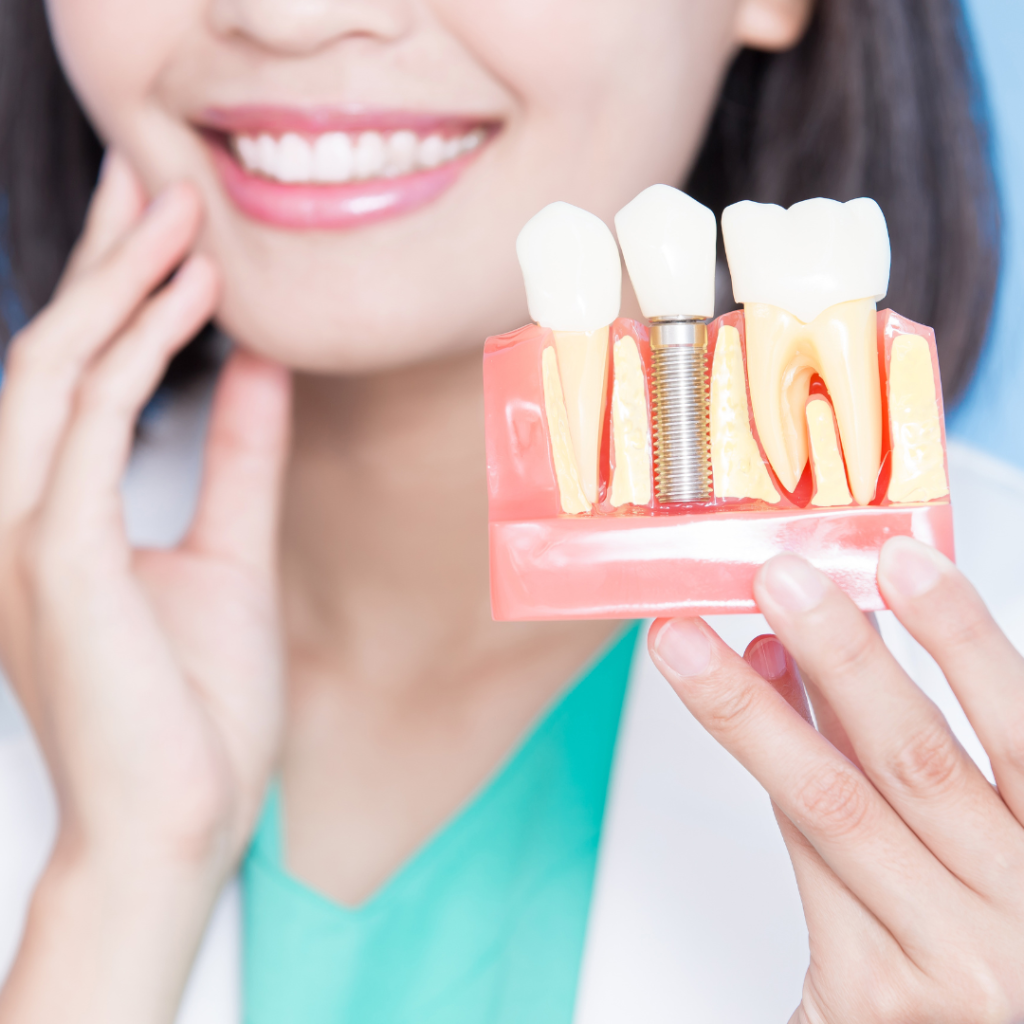
Implant Megagen for 2500 zł only
This solution provides durability, comfort, and a natural look, allowing you to enjoy everyday comfort.

Professional Dental Cleaning 4in1 + Check-up for 350 zł
The beginning of a new year is the perfect time to focus on your health and build good habits.
Implant Megagen for 2500 zł
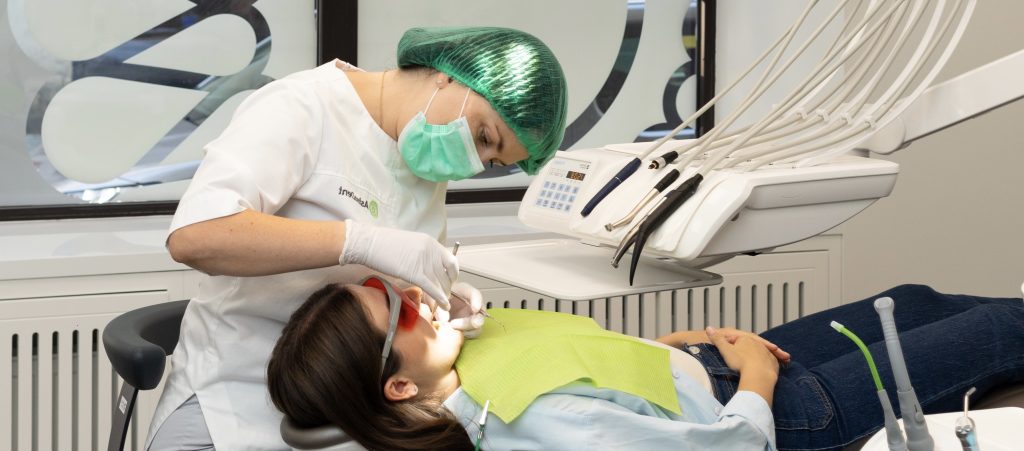
«First Filling in Astra Dent» Package for 399 PLN
Dental exam + filling for 399 PLN only
articles
Dental news
FAQ
FAQ
| Does oral surgery always involve tooth extraction? | |
|
No, not always. The goal of the surgery is often to save the tooth — for example, through an apicoectomy (root tip resection) or cyst treatment. Extraction is just one possible procedure, used only as a last resort. |
|
| What modern methods are used in dental surgery to minimize trauma? | |
|
At Astra Dent, we use microsurgical instruments, ultrasonic scalers, 3D navigation, and lasers. This ensures minimal tissue damage and faster recovery. |
|
| When is surgery necessary before dental implantation? | |
|
If there is insufficient bone volume to place an implant, bone grafting or a sinus lift is performed. A surgeon may also extract a tooth that interferes with the proper placement of the implant. |
|
| Is dental surgery for children safe? | |
|
Yes, procedures for children are performed with careful consideration of the young patients’ age, anatomy, and sensitivity. Gentle techniques, specialized anesthetics, and safe instruments are used. |
|
| What are the advantages of dental surgery at Astra Dent in Warsaw? | |
|
The collaborative work of surgeons, prosthodontists, and implantologists helps avoid complications and ensures lasting results. Every step is carried out based on digital planning and rigorous monitoring. |
|
| How long does recovery take after dental surgery? | |
|
In most cases, recovery takes 3-5 days for minor procedures and 7-14 days for complex ones. Complete tissue healing depends on the type of procedure, the patient’s general health, and adherence to post-operative instructions. |
|
| Can surgery be avoided if there is inflammation? | |
|
Not always. Sometimes, the source of inflammation cannot be eliminated without surgery. Surgery allows for the containment of the infection, preventing it from spreading to adjacent teeth and tissues. |
|
| Is advance preparation required for dental surgery? | |
|
Yes, before the procedure, the patient may need to undergo imaging (such as a CT scan), lab tests, and consultations with other specialists. It is important to inform the doctor in advance about any chronic medical conditions. |
|
| What types of growths are treated via dental surgery? | |
|
Surgeons remove cysts, granulomas, fibromas, and other pathological growths affecting soft and hard tissues. In some cases, a histological examination is performed after the surgery. |
|