Ceramic Inlay/Onlay in Warsaw — aesthetic and durable tooth restoration
Ceramic Inlay/Onlay are premium microprosthetic designs that restore tooth anatomy without excessive preparation. They are made of durable pressed or CAD/CAM ceramics, repeating the microrelief of the chewing surface. The inlays act as structural reinforcement, thereby reducing the risk of repeated destruction and caries.
With proper preparation and fixation, ceramic inlays last 5-10 times longer than composite restorations. Astra Dent specialists in Warsaw use a digital protocol for manufacturing microprosthetic elements. An intraoral scanner forms a three-dimensional model of the tooth, then the design is milled from monolithic ceramics and adjusted with micron accuracy to ensure tight marginal contact and prevent microleakage. Due to the high strength of the material and the controlled distribution of chewing load, the inlays retain their function and aesthetics for decades without losing their shine, abrasion or discoloration.
What are ceramic inlays and onlays?
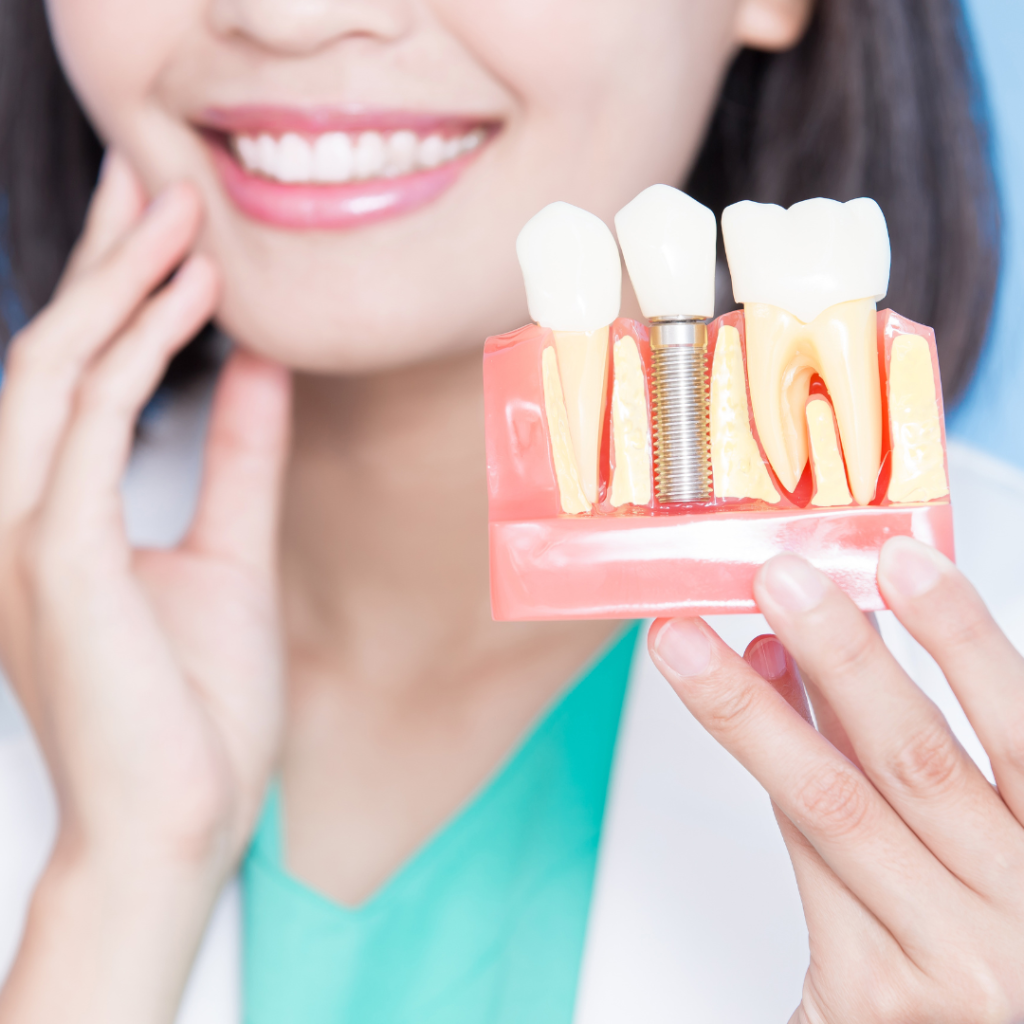
Ceramic inlays and onlays are precision orthopedic restorations that are manufactured outside the mouth and installed after fitting. The designs are created individually for each tooth, taking into account the relief, chewing pressure and bite characteristics. Unlike fillings, which are formed directly in the tooth, inlays are modeled in a digital environment. This provides control over each facet, which is unattainable when working with composite alone.
Inlay/Onlay serves as an intermediate link between a conventional filling and a crown. It strengthens weakened areas, restores the correct geometry of the tooth and preserves healthy tissues that would have to be ground down when installing a crown. Ceramics allow us to recreate the shape and microtexture of enamel, necessary for natural shine and resistance to abrasion.
What are the types of ceramic restorations:
- Inlay — a small insert that restores the bottom and inner walls of the cavity without covering the cusps. It is suitable if the preserved volume of tissues is sufficient for stability.
- Onlay — a more voluminous restoration that covers one or more cusps and strengthens the chewing surface. This option is used when the tooth has lost a significant part of the anatomical structure.
The distinction helps to choose a design that will ensure uniform load distribution and prevent cracks in the future. The more precisely the format of orthopedic restorations is chosen, the better the tooth will work under load.
Microprosthetic designs are made in a special dental laboratory from high-quality, durable ceramics — glass-ceramic or zirconium oxide. According to research, the survival rate of ceramic Inlay/Onlays after 5 years is 92-95%, and after 10 years — about 91%.
Who are inlays suitable for?
Precision orthopedic restorations are recommended in cases where the tooth needs strengthening without crown coverage. This is an intermediate, but highly precise method that helps restore the structure and function of the tooth with minimal intervention in healthy tissues.
Indications for strengthening teeth with microprosthetic structures:
- Significant loss of hard tissues. The volume of damage exceeds the capabilities of the filling, but the tooth still has sufficient wall thickness for indirect restoration.
- Weakened cusps. Thin or cracked areas do not withstand chewing pressure, so the onlay takes on part of the load and stabilizes the tooth surface.
- Recurrent caries after filling. Unreliable marginal contact of the composite promotes microleakage, while ceramics provide tightness and geometry control.
- Malocclusion. With uneven contact of the upper and lower teeth, it is necessary to restore the correct shape of the chewing surface in order to distribute the load symmetrically.
- Tendency to abrasion or bruxism. The ceramic surface has high hardness and retains its shape during nighttime teeth grinding.
- After endodontic treatment. The onlay strengthens the tooth after dental intervention, which leads to weakening of the crown part.
The use of onlays is determined by diagnostic criteria — analysis of the condition of the walls, the height of the cusps, the depth of the cavity and the nature of the occlusion. The homogeneity of the dentin, the presence of microcracks, the thickness of the enamel along the connection line and the ability of the tooth to withstand adhesive fixation without the risk of delamination are taken into account. During the digital examination, Astra Dent specialists check the symmetry of the contacts, the directions of chewing movements and potential overload zones, which determine whether it is necessary to cover the cusps and what format of the structure will be appropriate.
Why do patients choose ceramic onlays at Astra Dent Warsaw?
Orthopedic restorations give a predictable result if the medical institution has modern technologies, a clear work protocol and experience in microprosthetic restoration. Each stage of treatment at Astra Dent — from diagnosis to final fixation — is controlled using 2025 equipment and a thorough analysis of the occlusion. The advantages of the dental center are noticeable in the technologies used daily:
- Modern equipment and digital dentistry. We use an intraoral scanner with a reading accuracy of up to 15-20 microns, 3D modeling in a CAD environment and milling on CEREC systems, which guarantees a perfect fit of the inlay.
- Accurate diagnostics — minimal errors. Doctors assess the tooth using CT and digital targeted images to accurately determine the condition of the dentin, wall thickness and direction of microcracks that are not visible during a standard examination.
- Strong and aesthetic restorations. Inlays are made of pressed or milled ceramics with a strength of 350-400 MPa, which guarantees resistance to abrasion and a natural shine that lasts for years.
- English-speaking doctors. Consultation, explanation of the plan and discussion of treatment options take place without language barriers. The patient clearly understands each step and can ask questions in their native language.
- Transparent prices and an individual treatment plan. Each stage of therapy is signed in advance, and the plan is drawn up for a specific clinical case, indicating the materials and fixation methods.
- Comfortable location and appointment without queues. The Astra Dent Dental Center is located near the transport hubs of Warsaw. The doctors’ work schedule is organized so that patients can get to the appointment at a convenient time without waiting.
Every Astra Dent patient can count on a predictable result, because the treatment is based on clear digital measurements and a reproducible protocol. A modern approach to restoration allows us to restore the tooth so that it works, without overloading the neighboring areas of the dentition.
Advantages of ceramic inlays
Ceramic inlays and onlays are used where a conventional filling cannot guarantee long-term stability. In such situations, it is necessary to restore not only the shape, but also the rigidity of the walls and the correct geometry of the chewing surface so that the tooth can withstand the load without cracks and repeated destruction.
Advantages of ceramic onlays:
- Stronger than fillings (last 10-20 years). High-strength pressed or milled ceramics withstand significant chewing load, do not deform and do not lose shape over time.
- They maximally repeat the anatomy of the tooth. Digital modeling allows us to recreate the microrelief, the height of the tubercles and contact points as they looked before the destruction.
- Do not darken, do not wear out. Ceramics are chemically stable, do not absorb pigments from food and drinks and retain a smooth surface after many years of use.
- Reduce the risk of repeated caries. A tight marginal fit creates a hermetic barrier that prevents bacteria from penetrating under the restoration.
- Safe for the gums. The ceramic surface is smooth and biocompatible, so it does not irritate the gums or provoke inflammation.
- Perfect aesthetics — looks like a natural tooth. The transparency and optical properties of ceramics allow us to recreate the color and light reflection inherent in natural enamel.
Due to the combination of strength, anatomical accuracy and biocompatibility, onlays become the optimal choice when it is necessary to create a durable restoration with predictable functioning.
How is the treatment at Astra Dent Warsaw carried out?
Restoring a tooth with a ceramic onlay is a guided, step-by-step process carried out by Astra Dent doctors using a digital protocol. They accurately determine the preparation boundaries, assess the condition of the tissues and create a structure that works stably under load. Each stage is accompanied by quality control, so the result is predictable and long-lasting.
Consultation and digital diagnostics
The correct choice of treatment method begins with a quality diagnosis. During the initial appointment, the dentist assesses the condition of the tooth to determine whether the residual tissue volume is sufficient to fix the onlay:
- Occlusion assessment. The dentist identifies contact points and potential overload zones that may affect the shape of the future onlay.
- Digital images and CT. Hardware examination data allow us to see the thickness of the walls, the presence of cracks, the condition of the dentin and the quality of previous restorations.
- Intraoral scanning. The doctor receives a 3D model of the tooth with an accuracy of up to microns, which is important for further modeling of the structure.
After the diagnosis, the dentist draws up an individual treatment plan, determining the type of overlay, the stability forecast and the material that is best suited for a particular load.
Tooth preparation for the overlay
Before manufacturing the structure, it is necessary to form clear boundaries and eliminate weakened tissues. This is microsurgical work, which is performed under magnification and using modern burs to minimize stress on the tooth:
- Precise formation of the cavity. The specialist creates even walls and correct angles to ensure mechanical stability of the overlay.
- Elimination of cracks and weak fragments. Areas identified during the diagnosis are removed to prevent future fractures.
- Preparation of enamel for adhesion. The doctor processes the surface in such a way as to ensure a reliable connection with ceramics.
After preparation, the dentist checks the shape of the cavity again to make sure that it meets the requirements for indirect restoration and does not pose risks during fixation.
Scanning and manufacturing of the onlay in the laboratory
Digital scanning allows us to avoid the errors of traditional silicone impressions, and also speeds up the work of the laboratory:
- Creating a digital impression. The 3D scan reproduces the anatomy of the tooth and neighboring contacts.
- Modeling the onlay. The technician forms the relief and occlusal contacts, taking into account the patient’s load.
- Milling or pressing. Ceramics are processed on high-precision equipment, which ensures strength and stability of the shape.
The finished onlay undergoes final polishing and verification of compliance with the digital model. Thanks to the accuracy of CAD/CAM technologies, the design does not require significant correction during the fitting.
Temporary filling if necessary
After preparation, the tooth is protected until the permanent onlay is fixed. The temporary restoration serves not for aesthetics, but to isolate the tooth from chewing load, temperature changes and irritants.
Fixation of the finished ceramic onlay
The final stage requires precision, because the quality of fixation determines the durability of the restoration:
- Trying on and correcting contacts. The doctor checks the lateral and occlusal contacts to avoid overloading.
- Adhesive fixation. Astra Dent uses multi-component systems that ensure a strong connection with ceramics.
- Polymerization and polishing. After fixation, the onlay is polished to ensure smoothness and comfort during chewing.
After the procedure, the doctor evaluates the work of the structure under load, corrects microcontacts and gives recommendations for care.
What materials do we use?
The material of precision orthopedic restorations determines how long the onlay will work under load. Astra Dent in Warsaw uses only proven ceramic systems with predictable mechanical properties. The choice is made individually — depending on the thickness of the enamel, the size of the defect, chewing force and the localization of the tooth.
E.max ceramics and other premium materials
The main material for the manufacture of onlays is lithium disilicate ceramics E.max. It combines high bending strength, abrasion resistance and natural optical properties. It is used to create thin but extremely durable onlays that withstand long-term loads for 7-15 years.
The main properties of premium ceramics:
- Strength. Lithium disilicate demonstrates stable performance, which allows it to be used on chewing teeth.
- Optics. The material has a natural refractive index of light, so it accurately reproduces the color and depth of enamel.
- Abrasion resistance. The smooth surface retains its shape and shine even after years of use.
- Color stability. Ceramics do not absorb pigments and do not darken over time.
In cases where additional characteristics are important (greater rigidity, specific color, special transparency), technicians select other modern ceramic systems with known strength parameters and compatibility with the CAD/CAM protocol.
Customized work of dental technicians
After digital scanning, the overlay is produced by a technician who models the relief manually in a digital environment. It reproduces the tubercles, anatomical lines, transparency, the nature of light refraction and the depth of the enamel.
After milling, the design undergoes final manual finishing — polishing, optical correction, checking of occlusal contacts. The result is noticeably different from mass production, because the overlay fits exactly to the tooth surface and does not require repeated modifications.
How to make an appointment at Astra Dent Warsaw?
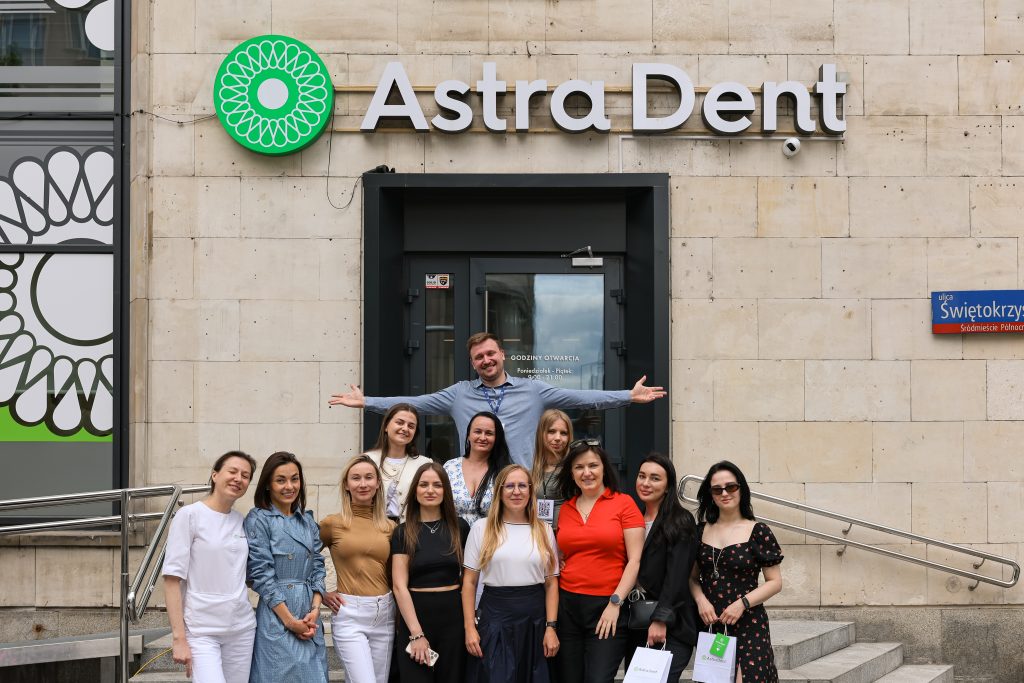
An appointment for a consultation at Astra Dent regarding orthopedic restorations takes place without unnecessary stages. The dental center team works according to a clear schedule, so patients are accepted at a specified time without queues, and the diagnosis and treatment plan are formed during the first visit.
There are several ways to contact Astra Dent in Warsaw:
- Phone: +48 533 599 552. Call to confirm the appointment time, ask questions about the onlays and find out if a preliminary diagnosis is required before the consultation.
- E-mail: info@astradent.pl. Write a letter if it is convenient to receive a written answer or if you need to send an X-ray or a photo of the tooth for a preliminary assessment.
- Online form. Submit an application through the official website so that the manager can contact you and offer the nearest free hours.
After making an appointment, the administrator will inform you about the results of which studies you should bring with you and how to prepare for the consultation.